


Strengthening Coastal Resilience, Freeport and the Ministry of Environment Plant 1.5 Million Mangrov
Sumbawa, July 8, 2026 – Minister of Environment/Head of the Environmental Monitoring Agency Mohammad Jumhur Hidayat, President Director of PT Freeport Indonesia Tony Wenas, Governor of West Nusa Tenggara (NTB) Lalu Muhammad Iqbal, and the community planted mangroves in Labuan Alas Village, Sumbawa Regency, West Nusa Tenggara. This activity supports the National Mangrove Program and marks the completion of PT Freeport Indonesia's program of planting 1.5 million mangrove seedlings across 484 hectares in NTB.
Minister of Environment/Head of the Environmental Management Agency (BPLH) Jumhur Hidayat stated that mangrove rehabilitation is a shared responsibility and welcomed PT Freeport Indonesia's commitment to supporting the national mangrove planting program. This planting is in line with the Ministry of Environment's program to encourage the planting of 2 billion trees in response to the global environmental crisis.
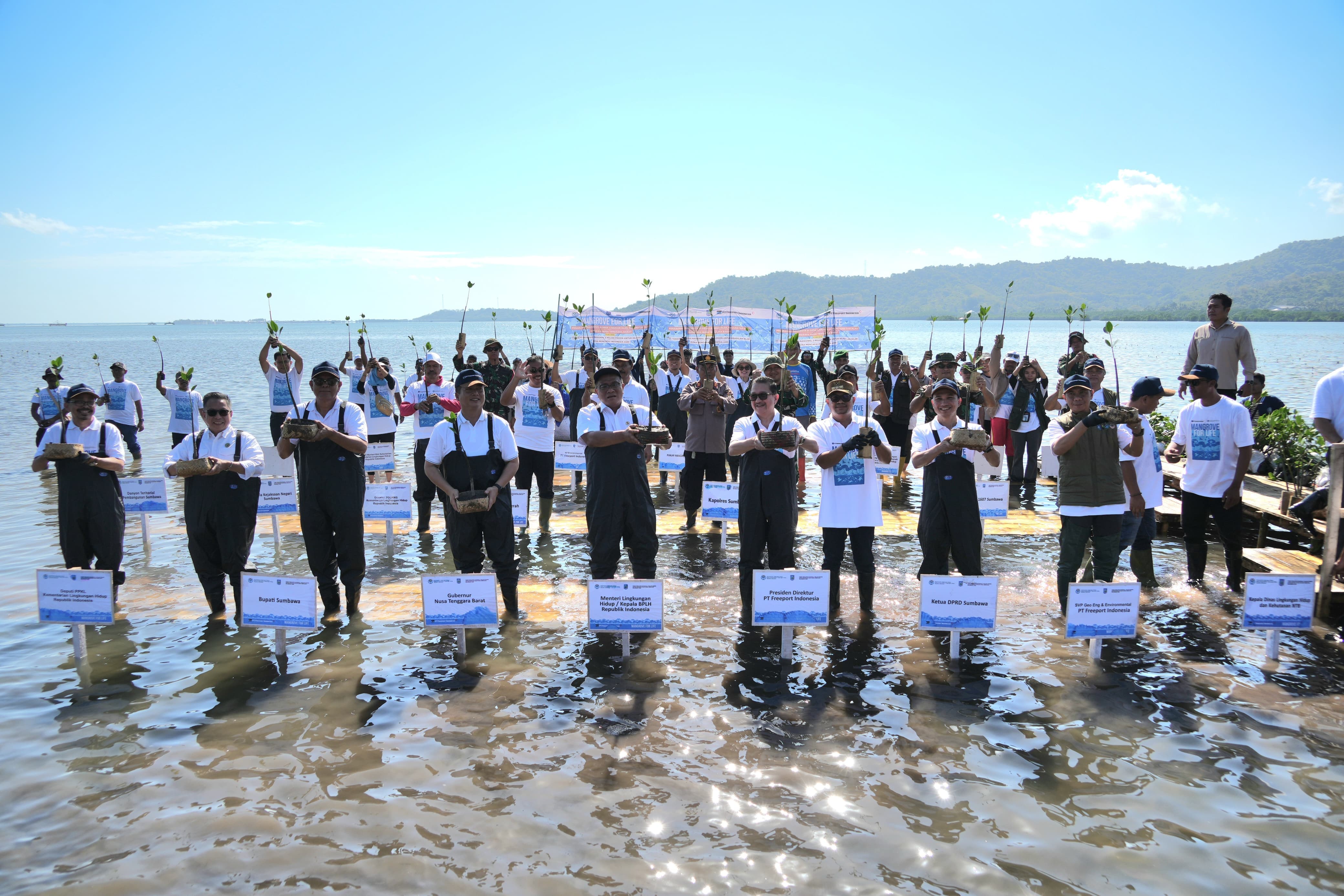
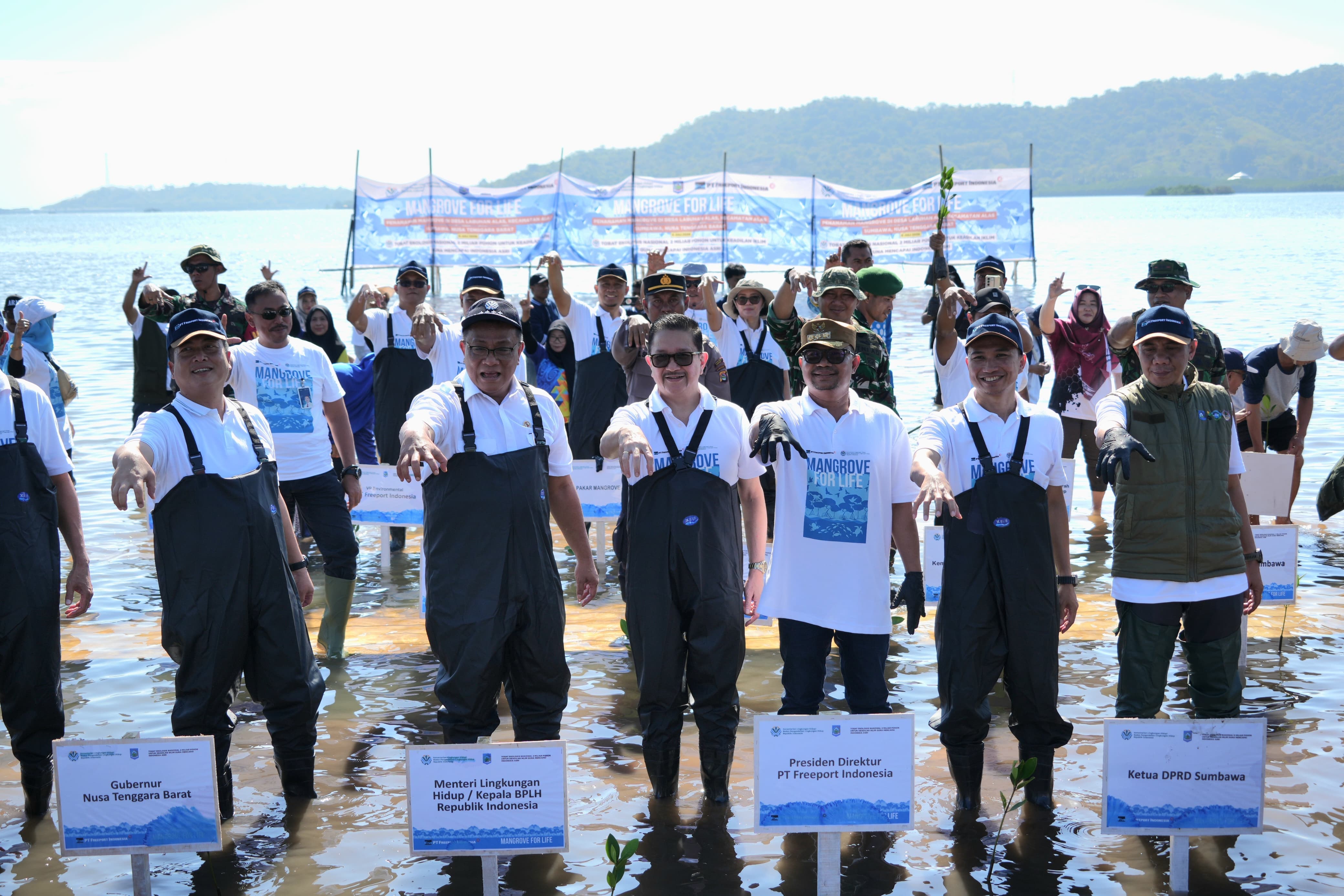
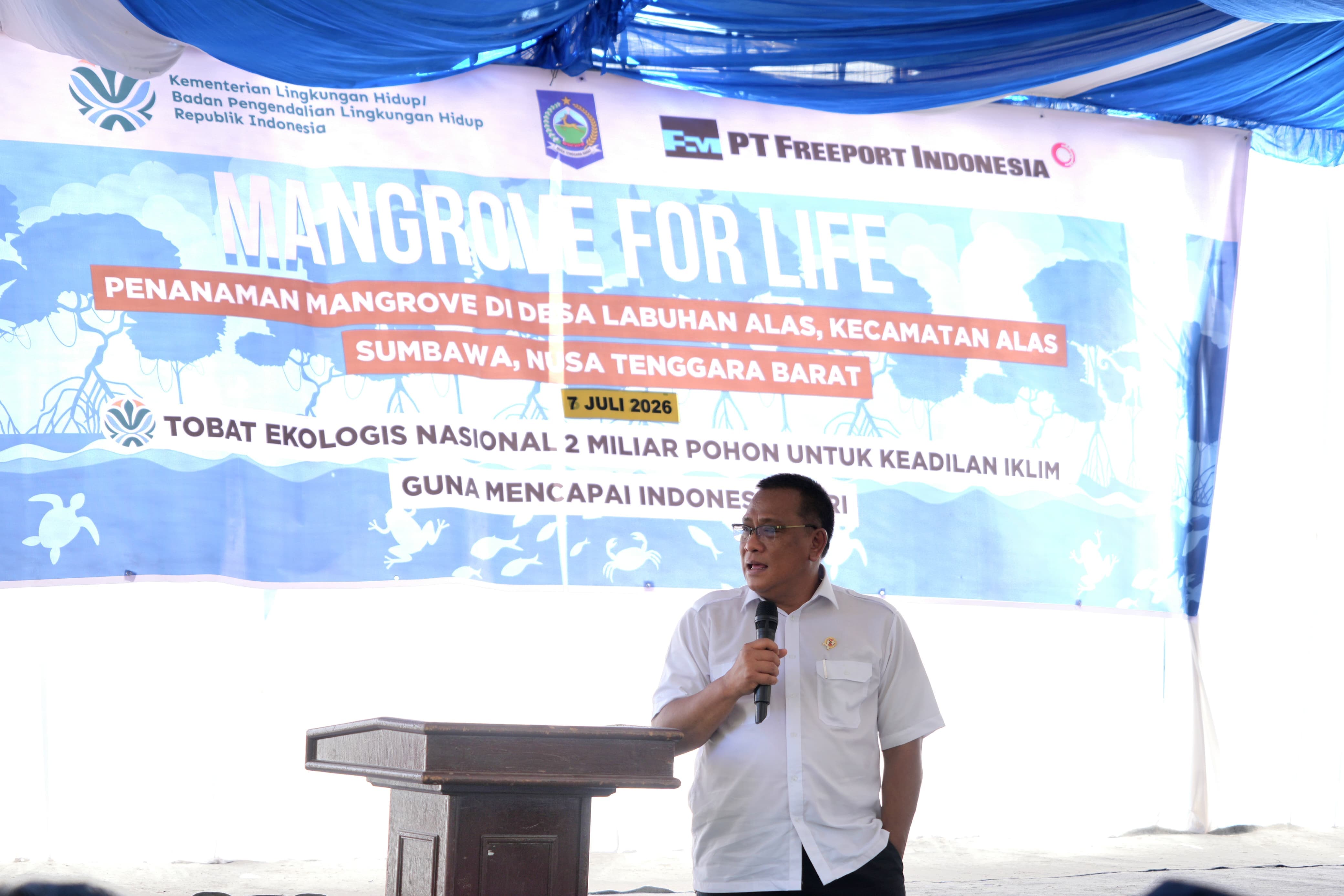
"PTFI has rehabilitated nearly 500 hectares of mangroves in West Nusa Tenggara and is targeting the rehabilitation of 12,000 hectares across Indonesia, particularly in Papua. Mangroves play a vital role in protecting coastal ecosystems, absorbing carbon, and supporting community livelihoods. Therefore, collaboration between the government, the business sector, and the community needs to be continuously strengthened to accelerate environmental recovery," said Jumhur.
PTFI President Director Tony Wenas explained that the total mangrove planting area in NTB is 484 hectares (73 percent of PTFI's total outside its Papua operations). Of this, 445 hectares are in Sumbawa Regency and 39 hectares in East Lombok Regency. Planting will take place in 2025 and 2026, with a total of 1.5 million mangrove seedlings.
The mangrove planting program in West Nusa Tenggara (NTB) is a follow-up to the Cooperation Agreement (PKS) signed in 2023 between the Peat and Mangrove Restoration Agency (BRGM), the Ministry of Environment and Forestry (KLHK), and PTFI. This program is PTFI's effort to support national mangrove restoration outside the company's operational area (Papua), with a target of 2,000 hectares. Mangrove planting locations are determined based on proposals from the Ministry of Environment (KLH), which are then verified by Gadjah Mada University (UGM).
Currently, 834 hectares of verified locations for PTFI's mangrove rehabilitation program have been reached. Outside Papua, 666 hectares have been planted, with a total of two million mangrove seedlings planted. The locations are spread across eight provinces: NTB, Bali, East Kalimantan, South Kalimantan, Bangka-Belitung, Riau, West Sumatra, and North Sumatra. Thousands of community members are actively involved in this mangrove planting program.
"Furthermore, in Papua, specifically in Mimika Regency, PTFI has planted around 5.5 million mangrove seedlings across an area of over 2,184 hectares in Papua," said Tony.
Tony added that the planting of 1.5 million mangrove seedlings in West Nusa Tenggara (NTB) involved around 1,500 local people in various stages of the activity, from nursery planting to maintenance. In addition to supporting the successful rehabilitation of coastal areas, this involvement serves as a means of raising public awareness and concern for mangrove conservation and the importance of sustainably protecting the environment.
Muhammad Tisnaini, a member of the Sumbawa Mangrove Community, expressed his appreciation for the mangrove planting program, which has provided tangible benefits to coastal communities.
"We have mentored five community groups who are now able to produce seedlings and plant them independently. The presence of mangroves also helps fishermen because they provide habitat for various types of fish, so they don't have to go too far out to sea to catch their catch," said Tisnaini.
He hopes that more communities, especially those in coastal areas, will participate in protecting and caring for mangroves so that their benefits will continue to be enjoyed by future generations.
The mangrove planting activity in Labuhan Alas symbolizes the ongoing collaboration between the government, business, academics, and the community in preserving the mangrove ecosystem as a natural coastal protector, a habitat for biodiversity, and a carbon sink that plays a crucial role in addressing the challenges of climate change.
"PTFI hopes this collaboration will continue to strengthen coastal ecosystem rehabilitation efforts and create sustainable environmental, social, and economic benefits for future generations," said Tony.
Back To List

