Timika, August 3, Thousands of PT Freeport Indonesia employees and community members, standing 2,400 meters above sea level at Ridge Camp in Tembagapura District, Mimika Regency, Central Papua Province, held an "Indonesian Cultural Parade" to celebrate the 80th anniversary of the Republic of Indonesia.
"Indonesia's diversity is a strength that must be embraced. Through the Indonesian Cultural Parade, diversity becomes a strong reason that unites PTFI employees and the community to respect and work together," said Carl Tauran, Executive Vice President of Site Operations/Head of Mining Engineering at PTFI, while watching the parade on Saturday, August 2, 2025.
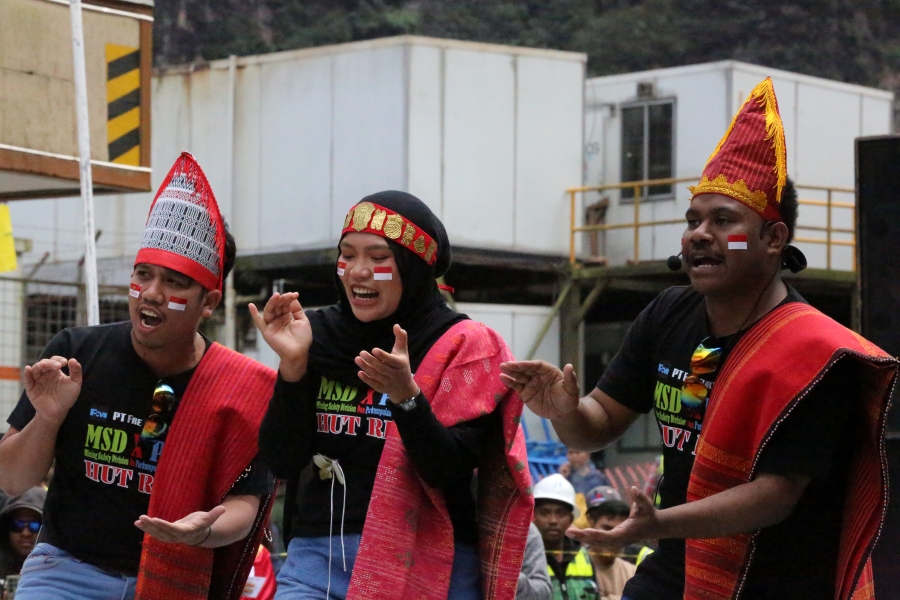
The Cultural Parade at Ridge Camp featured a miniature Indonesia. Each employee community represented traditional arts and culture from various regions in Indonesia, including East Java, Papua, South Kalimantan, Maluku, Bali, East Nusa Tenggara, and others. They paraded around the Ridge Camp area dressed in traditional attire and carrying regional crafts. Balinese Gamelan music, Reog Ponorogo, the typical Kalimantan Sape music, and other traditional music accompanied the performances of each community.
Rode Ajomi, Chairman of the 80th Indonesian Independence Day Celebration Committee at PTFI, explained that Ridge Camp is a supporting area for PTFI's operations. This 56-hectare area also houses 12,000 employees from various divisions, including Underground Mine, Concentrating, Operations Maintenance, Central Services, and Grasberg Earthworks. Ridge Camp is equipped with accommodations, sports facilities, and shopping areas. The employees come from various regions of Indonesia, from Sabang to Merauke, with diverse cultures and traditions, yet they respect each other's differences.
"Through this activity, we want to showcase diversity as a symbol of Indonesian unity at PTFI, in Tembagapura District, Mimika Regency, Central Papua Province. Hopefully, this will inspire everyone to continue strengthening unity in diversity. Because this is Indonesia's strength," said Rode.
In this cultural parade, the Mining Safety Division collaborated with the Tembagapura Batak Family Association (PKBT), which embodies independence through productive and safe work. They adopted "Owlie Ulos" as their cultural safety mascot. Owlie Ulos is a brave and wise owl dressed in Ulos, a typical woven cloth of the Batak Tribe.
Representing the culture of never giving up, the Operations Maintenance Division and the Minangkabau Family Association displayed buffalo horn headdresses with authentic Minangkabau traditional cloth motifs. This craft symbolizes the Minangkabau people's contribution to the development of the country in eastern Indonesia. 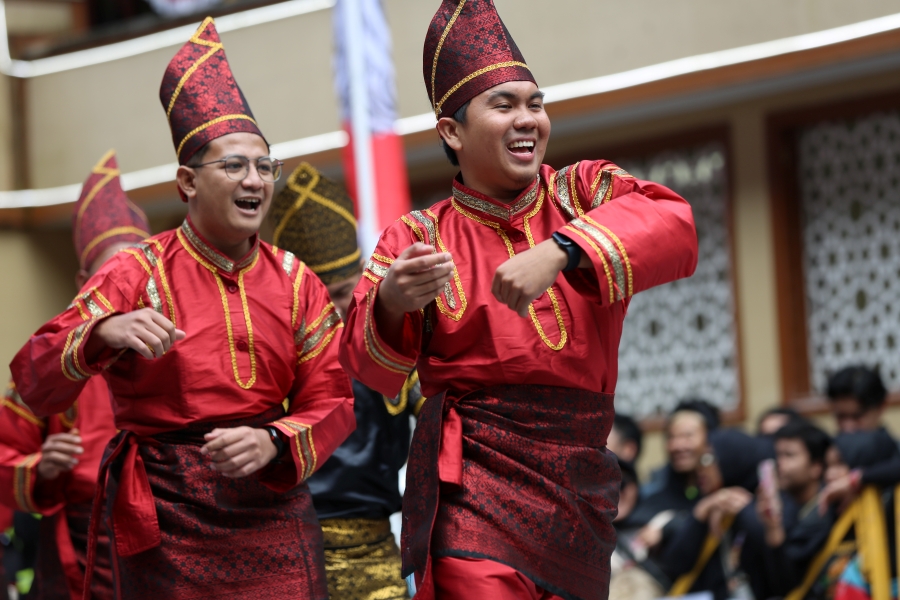
The South Sumatra Concentrating and Community Harmony Division presented cultural traces, the voices of their ancestral homeland, and the spirit of struggle at a cultural festival. They presented Sumatran tiger craft, a symbol of resilience, courage, and survival. In local culture, tigers are often depicted as guardians of the forest and a symbol of natural power. This conveyed a philosophical message about the harmony of the Freeport Indonesia community, united for the sake of the nation's sovereignty.
The values of honesty and integrity were symbolized in the Singa craft, a collaboration between the Security Risk Management Division and Mitra Riung Gunung, as a Sundanese cultural performance.
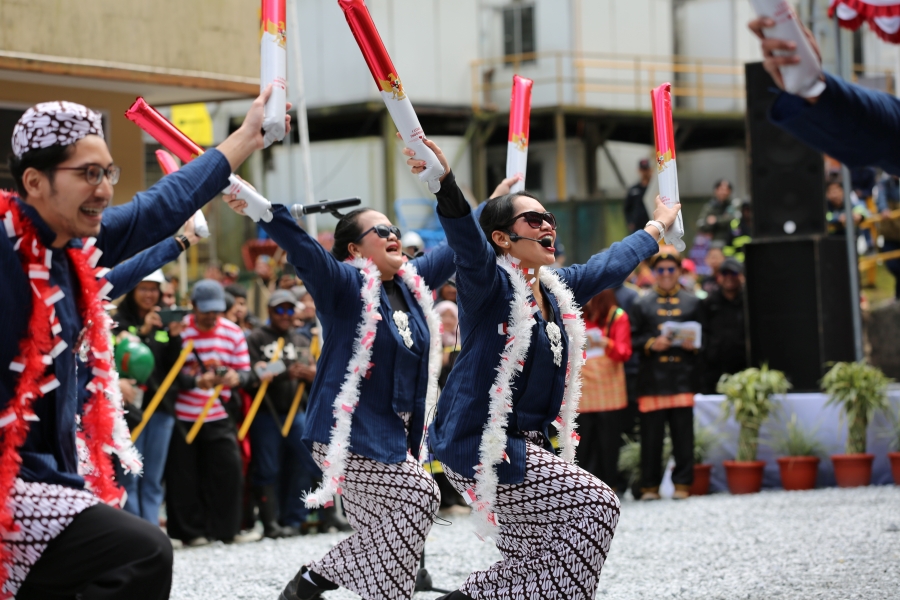
The spirit of diversity and struggle was demonstrated by the Learning and Organizational Development Division and the Ngayogjokarto Association by presenting Gatotkaca craft. He is a Javanese puppet character who is known as a brave and strong knight, nicknamed "Otot Kawat Balung Wesi" (iron bone wire muscle) and is a symbol of a person who is insightful and intelligent in science.
The Global Supply Chain, Contract Compliance, and International SOS divisions collaborated with East Java to present the Reog Ponorogo dance, known for its physical strength, mystical elements, and magnificent costumes. The staff performed the Dhadhak Merak, a Barong lion-headed costume adorned with peacock feathers weighing approximately 30 kilograms. The dances were followed by Warok dancers, Patih Jenaka Ganong, and the Jathil horse troop, symbolizing strength, spirit, and courage.
Sakinah Rakhmatiyah, an employee of the Global Supply Chain Division, expressed her pride in introducing East Javanese culture to PTFI employees and management.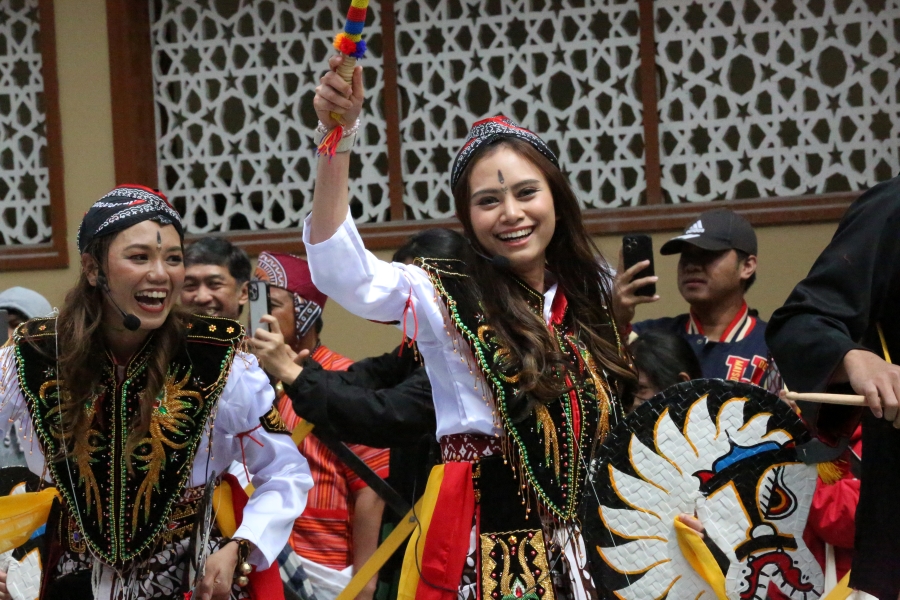
"In the midst of our busy work schedules, we collaborated to pour our ideas and creativity into delivering the best performance of the Reog Ponorogo dance for employees and the community from diverse backgrounds," said Sakinah.
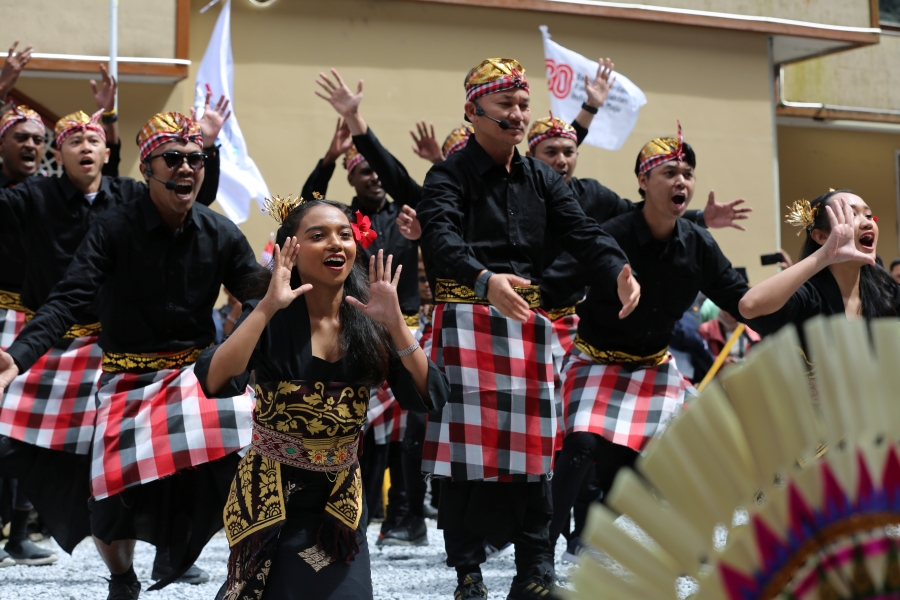
Based on the principle of Tri Hita Karana, the philosophy of the three causes of happiness, the Geoengineering and Environmental Division, along with the Balinese Community, demonstrated the unification of geoengineering, beauty, and Indonesian culture. The Boma craft exhibition depicts the natural landscape and all its contents, complementing and protecting each other, such as water, forests, mountains, and rivers. In this craft, Boma represents the earth, partially mined and reforested through reclamation, demonstrating PTFI's commitment to safe and sustainable production.
This collaboration between the Underground Mine Division and the Kalimantan Tembagapura Family Association demonstrates that advances in underground mining technology and local wisdom can work synergistically and hand in hand. This collaboration showcases traditional Dayak clothing and its Dayak Warlords. By presenting hornbill craftwork above the Underground Mine tunnel, employees conveyed a philosophical message about the contribution of the nation's sons and daughters who built civilization through high-quality copper ore.
The Technical Services, General Constructions and Special Projects (GCSP), Maintenance Support, Power Generator & Transmission Divisions were present, along with the South Sulawesi Family Association (KKSS). They presented the "Lellu," a large umbrella made of silk and decorated with gold thread embroidery that serves as both a tent and a stretcher handle. In traditional ceremonies, the Lellu is primarily used to shelter kings or important guests, symbolizing majesty and honor.
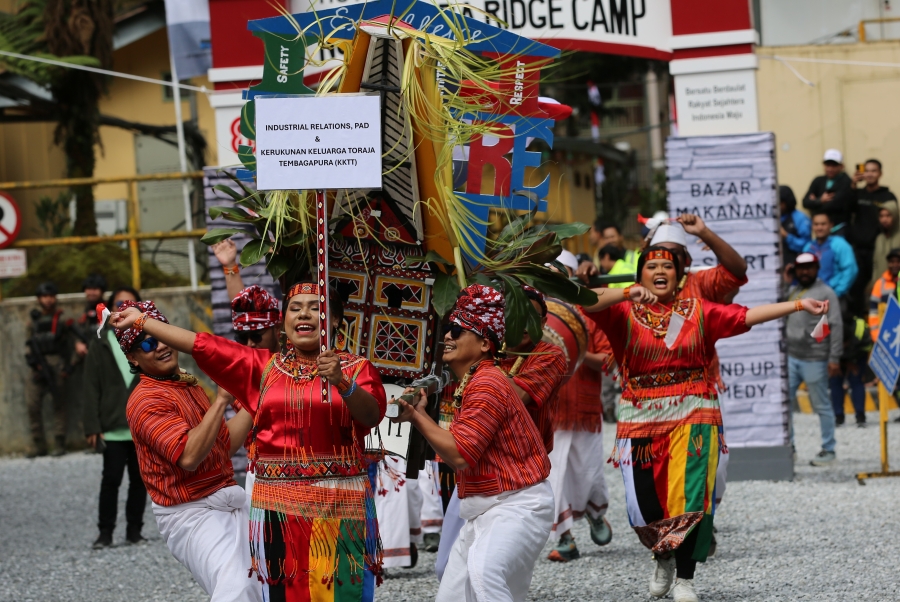
Appearing in traditional Tallu Buku and Sepa Talluna attire and exhibiting the Toraja Tongkonan Traditional House, the Industrial Relations & Papuan Affairs Division collaborated with the Toraja Tembagapura Family Association to demonstrate synergy in the spirit of Indonesian Independence. Not only does the Tongkonan House serve as a residence, it also symbolizes social status and ancestral heritage, reflecting Freeport Indonesia's role as a home for diverse ethnicities, nations, and cultures across Indonesia and the world.
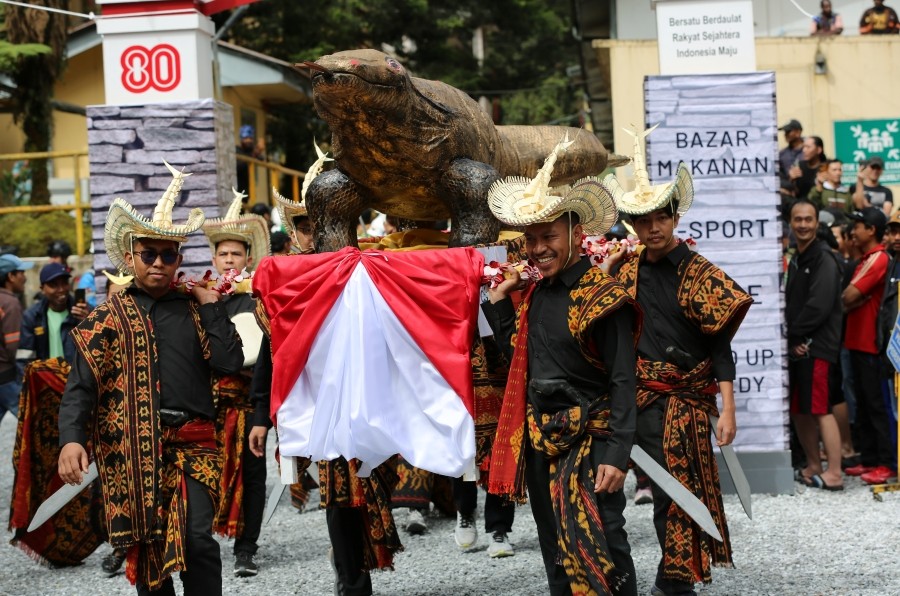
By presenting a replica of the Komodo dragon, the Central Services Division and Flobamora (Flores, Sumba, Timor, Rote, Alor, Lembata, and Sabu) represent a symbol of strength, resilience, and uniqueness. In the context of the independence celebrations, this ornament reflects the spirit of the Indonesian nation, which is strong, resilient, and rich in diversity.
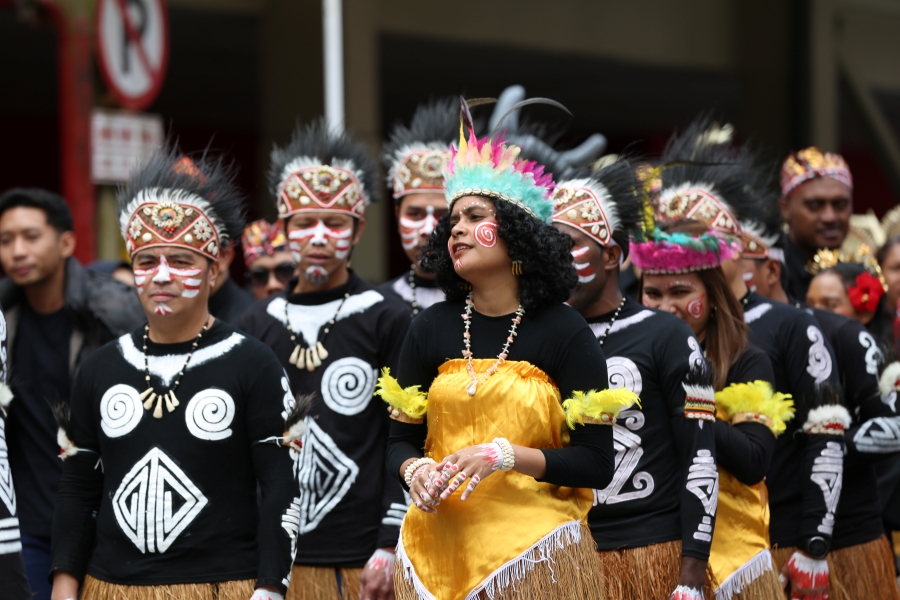
At the easternmost tip of Indonesia, the Grasberg Earthworks Division collaborated with the Papuan Association to showcase the local wisdom of the Papuan people, featuring attributes of traditional Papuan clothing. The presence of the Noken at the craft exhibition symbolizes that noken knitting is not simply stringing strands of rattan yarn into a bag, but rather a reflection of togetherness, cooperation, and patience. In sustainable mining operations from upstream to downstream, the Noken embodies a vessel for collective life and a symbol of national unity.
"I saw every employee show respect and admiration for the diversity of ethnicities, cultures, and languages found in PTFI's operational area. This is a tangible reflection of Indonesia's sovereignty over the land of Papua," said Ida Nekwek, an employee at the Grasberg Earthworks Division.
PTFI, the world's largest integrated copper mining company from upstream to downstream, also celebrated Indonesia's 80th anniversary. Throughout August, PTFI held various activities that fostered the spirit of nationalism and mutual cooperation at its five operating locations, from upstream in Papua—including Tembagapura, Kuala Kencana, and Nabire—to downstream in Gresik, East Java, and Jakarta.
In Tembagapura, various competitions and cultural performances were held with residents of Banti Village. In the Lowlands, social service and village cleaning activities were held in Ayuka and Tipuka, as well as competitions for children and adults. In Nabire, free cataract surgeries were held, combined with education and free eye exams for 1,000 schoolchildren. In Gresik, blood drives, digital training for Gresik MSMEs, and the Melodi Tembaga Nusantara Concert took place. The culmination was the 80th Indonesian Independence Day Commemoration Ceremony, attended by all employees and contractors at PTFI's five work locations.
All activities were carried out in a spirit of mutual cooperation and togetherness with the local community. Together with the nation's best sons and daughters, PTFI continues to contribute to the nation, conducting safe and sustainable operations as a form of gratitude for Indonesia's 80th anniversary of independence. (Corporate Communications)
Don't Miss the special coverage by Kompas TV here https://youtu.be/4AsCv_q1u6M?si=1fjhh9dhfd0w5nhF
Back To List